Buy raumplanung.eu ?
We are moving the project
raumplanung.eu .
Are you interested in purchasing the domain
raumplanung.eu ?
domain@kv-gmbh.de · 0541-91531010
Buy raumplanung.eu ?
Is urban design more like city planning or urban development?
Urban design is more closely related to city planning than urban development. City planning focuses on the organization and development of urban areas, including land use, infrastructure, and public spaces, which are all key components of urban design. Urban development, on the other hand, typically refers to the physical construction and economic growth within urban areas, which is influenced by urban design and city planning decisions. Therefore, while urban design is related to both city planning and urban development, it is more aligned with the principles and goals of city planning. **
Is the word Chef or Direktor a loanword?
The word "Chef" is a loanword, as it comes from the French language where it means "chief" or "boss." It has been borrowed into English to refer to the head cook or executive chef in a kitchen. On the other hand, "Direktor" is not a loanword, as it is a German word that means "director" or "manager." Loanwords are words borrowed from another language and incorporated into the vocabulary of another language, while "Direktor" is a native German word. **

Similar search terms for Loanword
Top-Angebote
Products related to Loanword:
-
ClearBags "#10 Policy Premium Envelopes, Natural 4 1/8"" x 9 1/2"" 50 pack"Natural, Premium Opaque Envelopes feature a smooth and uniform print surface delivers rich and vibrant colors. Natural, Premium Opaque Envelopes provide uncompromising quality and excellent value. FSC and SFI-Certified and endorsed by the Rainforest...27,56 $*Shipping: 0,00 $Secure redirect to the provider
-
Playful Picks Intelligent Escaping Toy Interactive Baby Development Toy Intelligent Escaping Toy Interactive Baby Development ToyIntelligent Escaping Toy The Ultimate Interactive Baby Development ToyDont let your toddlers get glued to mobile screens; introduce them to the Intelligent Escaping Toy, the perfect alternative that promotes healthy growth and development. Unlike...29,97 $*Shipping: 0,00 $Secure redirect to the provider
-
Yellow Kite Food Fix by Mark Hyman MD - Paperback - Food Policy, Health & Environment Non-Fiction BookFood Fix by Mark Hyman is a non-fiction paperback book that explores the connection between food and the crises facing society. Written by New York Times best-selling author and physician Mark Hyman, this book argues that fixing our broken food system could have a positive impact on our health, local economies, communities, and the planet. In Food Fix, Hyman lays bare how industrial food and agriculture systems are shaped by powerful financial interests, driving issues such as obesity and type 2 diabetes. This book is essential reading for anyone concerned about the intersection of food, health, and the environment.3,49 £*Shipping: 2,99 £Secure redirect to the provider
-
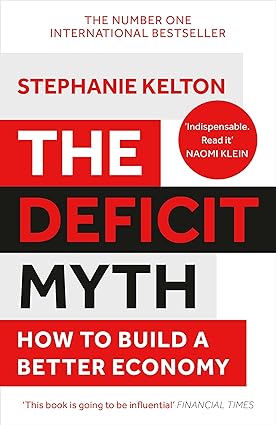
The Deficit Myth by Stephanie Kelton - Modern Monetary Theory - Paperback - John Murray Press - Economics & Public Policy BookThe Deficit Myth by Stephanie Kelton is a thought-provoking book that rethinks how modern economies work. Drawing on Modern Monetary Theory (MMT), Kelton challenges the conventional wisdom that government deficits are inherently dangerous, arguing instead that they can be powerful tools for funding public services and infrastructure. This paperback edition is a clear and accessible explanation of public finance and economic policy, making it essential reading for anyone interested in these topics. About the book, economist Stephanie Kelton dismantles the idea that government deficits are a looming disaster, showing that for countries that issue their own currency, the true constraint on spending is not a shortage of money but a shortage of political will to invest in the things that matter.5,99 £*Shipping: 2,99 £Secure redirect to the provider



-
What is the difference between loanword and loan meaning?
A loanword is a word taken from one language and used in another language with little to no translation, while a loan meaning is when a word in one language adopts a new meaning from another language. Loanwords retain their original form, while loan meanings involve a shift in the meaning of a word. Both loanwords and loan meanings contribute to the enrichment and evolution of languages through cultural exchange and borrowing. **
-
What is a loanword and what is a long vowel?
A loanword is a word adopted from one language and incorporated into another language without translation. Loanwords often retain their original spelling and pronunciation. On the other hand, a long vowel is a vowel sound that is pronounced for an extended period of time compared to a short vowel. In English, long vowels are typically represented by a single vowel letter followed by a silent 'e' at the end of a word, such as in the word "cake." **
-
What is the difference between a foreign word and a loanword?
A foreign word is a word that comes from another language and is used in its original form without any adaptation or integration into the receiving language. A loanword, on the other hand, is a word that has been borrowed from another language and has been integrated into the receiving language, often with some modifications to fit the phonological, morphological, or syntactic patterns of the receiving language. In other words, a loanword is a foreign word that has been assimilated into the vocabulary of the receiving language. **
-
What is the difference between a loanword and a technical term?
A loanword is a word that has been borrowed from one language and incorporated into another language, often with some adaptation to fit the phonological and morphological patterns of the borrowing language. Loanwords often retain their original meaning and may be used in a variety of contexts. On the other hand, a technical term is a word or phrase that has a specific meaning within a particular field or discipline, such as science, technology, or medicine. Technical terms are often used to convey precise and specialized information within a specific context, and may not be widely understood outside of that context. While loanwords can come from any language and be used in a variety of contexts, technical terms are specific to certain fields and are used to convey specialized meanings within those fields. **

Does the word "Delusion" exist as a German loanword or only "Illusion"?
The word "Delusion" does exist as a German loanword, but it is not as commonly used as "Illusion." "Delusion" in German is "Täuschung," which can also be translated as "deception" or "misconception." While "Illusion" is more commonly used in both English and German, "Delusion" is still recognized as a loanword in the German language. **
What is the difference between a loanword, a foreign word, and a native word?
A loanword is a word taken from one language and used in another language with little to no translation. A foreign word is a word that originates from a different language but has been fully integrated into the vocabulary of the borrowing language. A native word is a word that is original to and commonly used in the language in which it is spoken. The key difference lies in the origin and level of integration of these words into the borrowing language. **
Top-Angebote
Products related to Loanword:
-
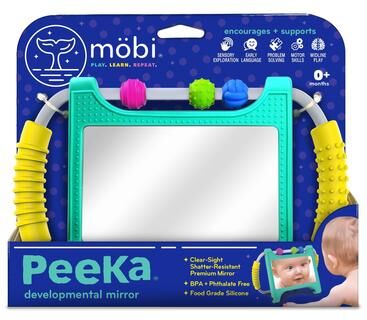
Mobi Peeka Development MirrorPEEKA® developmental mirror was designed by our team of doctors, therapists and parents to help children explore, learn and grow. When you place PEEKA® in the hands of your little ones, you will be amazed at the variety of ways they find to play...27,49 $*Shipping: 0,00 $Secure redirect to the provider
-
ClearBags "#10 Policy Premium Envelopes, White 4 1/8"" x 9 1/2"" 50 pack"White, Premium Opaque Envelopes feature a stellar brightness and balanced white shade. The smooth and uniform print surface delivers rich and vibrant colors. White, Premium Opaque Envelopes provide uncompromising quality and excellent value....24,79 $*Shipping: 0,00 $Secure redirect to the provider
-
ClearBags "#10 Policy Premium Envelopes, Natural 4 1/8"" x 9 1/2"" 50 pack"Natural, Premium Opaque Envelopes feature a smooth and uniform print surface delivers rich and vibrant colors. Natural, Premium Opaque Envelopes provide uncompromising quality and excellent value. FSC and SFI-Certified and endorsed by the Rainforest...27,56 $*Shipping: 0,00 $Secure redirect to the provider
-
Playful Picks Intelligent Escaping Toy Interactive Baby Development Toy Intelligent Escaping Toy Interactive Baby Development ToyIntelligent Escaping Toy The Ultimate Interactive Baby Development ToyDont let your toddlers get glued to mobile screens; introduce them to the Intelligent Escaping Toy, the perfect alternative that promotes healthy growth and development. Unlike...29,97 $*Shipping: 0,00 $Secure redirect to the provider
-
Is urban design more like city planning or urban development?
Urban design is more closely related to city planning than urban development. City planning focuses on the organization and development of urban areas, including land use, infrastructure, and public spaces, which are all key components of urban design. Urban development, on the other hand, typically refers to the physical construction and economic growth within urban areas, which is influenced by urban design and city planning decisions. Therefore, while urban design is related to both city planning and urban development, it is more aligned with the principles and goals of city planning. **
-
Is the word Chef or Direktor a loanword?
The word "Chef" is a loanword, as it comes from the French language where it means "chief" or "boss." It has been borrowed into English to refer to the head cook or executive chef in a kitchen. On the other hand, "Direktor" is not a loanword, as it is a German word that means "director" or "manager." Loanwords are words borrowed from another language and incorporated into the vocabulary of another language, while "Direktor" is a native German word. **
-
What is the difference between loanword and loan meaning?
A loanword is a word taken from one language and used in another language with little to no translation, while a loan meaning is when a word in one language adopts a new meaning from another language. Loanwords retain their original form, while loan meanings involve a shift in the meaning of a word. Both loanwords and loan meanings contribute to the enrichment and evolution of languages through cultural exchange and borrowing. **
-
What is a loanword and what is a long vowel?
A loanword is a word adopted from one language and incorporated into another language without translation. Loanwords often retain their original spelling and pronunciation. On the other hand, a long vowel is a vowel sound that is pronounced for an extended period of time compared to a short vowel. In English, long vowels are typically represented by a single vowel letter followed by a silent 'e' at the end of a word, such as in the word "cake." **
Similar search terms for Loanword
-
Yellow Kite Food Fix by Mark Hyman MD - Paperback - Food Policy, Health & Environment Non-Fiction BookFood Fix by Mark Hyman is a non-fiction paperback book that explores the connection between food and the crises facing society. Written by New York Times best-selling author and physician Mark Hyman, this book argues that fixing our broken food system could have a positive impact on our health, local economies, communities, and the planet. In Food Fix, Hyman lays bare how industrial food and agriculture systems are shaped by powerful financial interests, driving issues such as obesity and type 2 diabetes. This book is essential reading for anyone concerned about the intersection of food, health, and the environment.3,49 £*Shipping: 2,99 £Secure redirect to the provider
-
The Deficit Myth by Stephanie Kelton - Modern Monetary Theory - Paperback - John Murray Press - Economics & Public Policy BookThe Deficit Myth by Stephanie Kelton is a thought-provoking book that rethinks how modern economies work. Drawing on Modern Monetary Theory (MMT), Kelton challenges the conventional wisdom that government deficits are inherently dangerous, arguing instead that they can be powerful tools for funding public services and infrastructure. This paperback edition is a clear and accessible explanation of public finance and economic policy, making it essential reading for anyone interested in these topics. About the book, economist Stephanie Kelton dismantles the idea that government deficits are a looming disaster, showing that for countries that issue their own currency, the true constraint on spending is not a shortage of money but a shortage of political will to invest in the things that matter.5,99 £*Shipping: 2,99 £Secure redirect to the provider
-
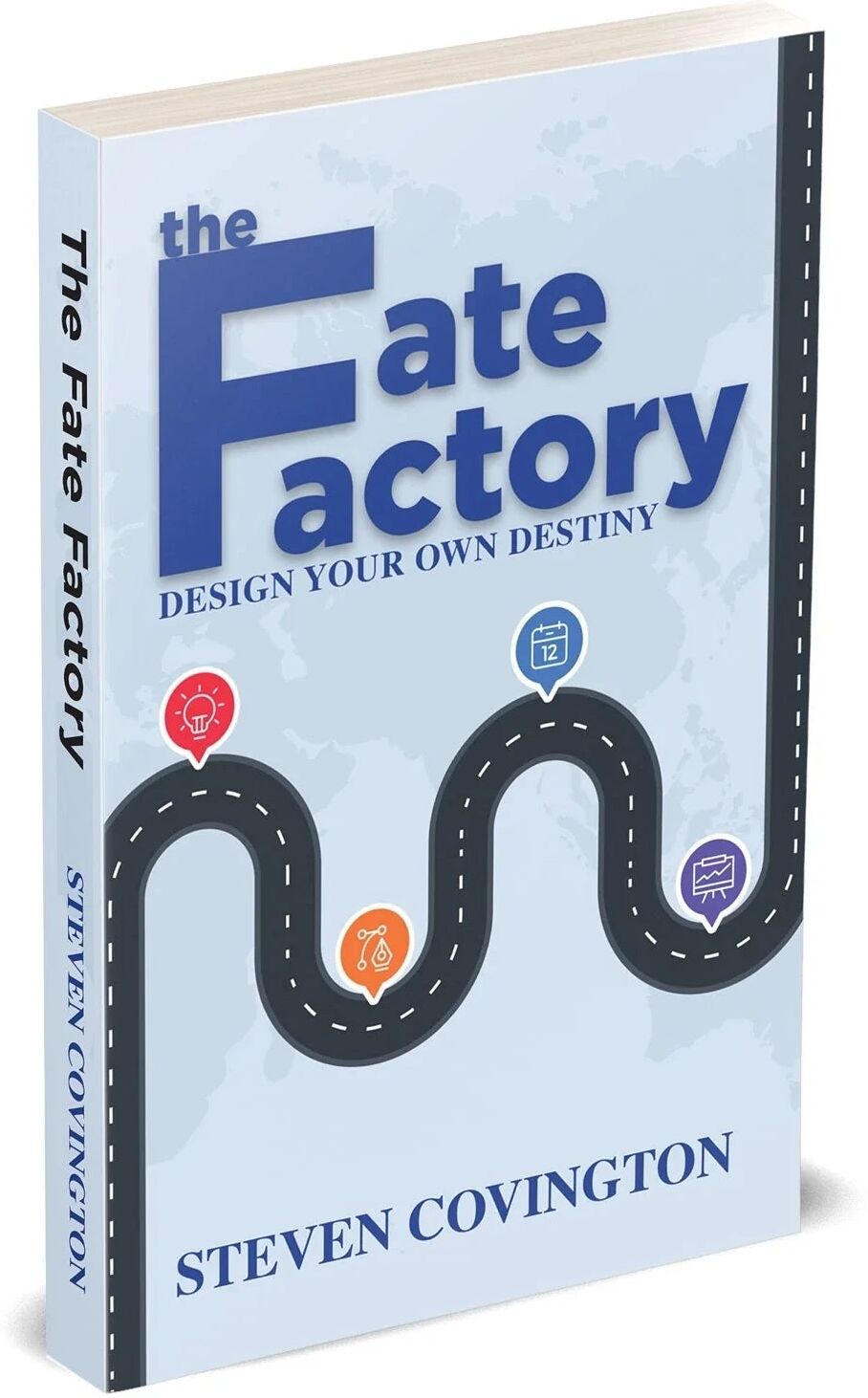
Rupa Publications The Fate Factory: Design Your Own Destiny by Steven Covington - Non Fiction Paperback - Personal Development & Decision-Making GuideDiscover a bold and practical guide to personal empowerment with The Fate Factory: Design Your Own Destiny by Steven Covington. This non-fiction paperback, published by Rupa Publications, offers a no-nonsense approach to achieving success. Covington, a veteran strategic advisor, argues that every decision shapes your future and that luck is not a reliable factor. He challenges readers to take deliberate control of their choices, careers, and relationships by making informed decisions day by day. This book is ideal for those seeking grounded thinking and practical advice on how to build their own fate.2,99 £*Shipping: 2,99 £Secure redirect to the provider
-
Uplift Curations Montessori Busy Ball Grasping Toy For Early Sensory Development Montessori Busy Ball Grasping Toy For Early Sensory DevelopmentSupport your babys earliest learning moments with a toy designed for discovery and growth. This engaging Montessori busy ball encourages babies to explore, grab, and interacthelping build essential skills through play. Its open, easytohold structure...46,50 $*Shipping: 0,00 $Secure redirect to the provider
-
What is the difference between a foreign word and a loanword?
A foreign word is a word that comes from another language and is used in its original form without any adaptation or integration into the receiving language. A loanword, on the other hand, is a word that has been borrowed from another language and has been integrated into the receiving language, often with some modifications to fit the phonological, morphological, or syntactic patterns of the receiving language. In other words, a loanword is a foreign word that has been assimilated into the vocabulary of the receiving language. **
-
What is the difference between a loanword and a technical term?
A loanword is a word that has been borrowed from one language and incorporated into another language, often with some adaptation to fit the phonological and morphological patterns of the borrowing language. Loanwords often retain their original meaning and may be used in a variety of contexts. On the other hand, a technical term is a word or phrase that has a specific meaning within a particular field or discipline, such as science, technology, or medicine. Technical terms are often used to convey precise and specialized information within a specific context, and may not be widely understood outside of that context. While loanwords can come from any language and be used in a variety of contexts, technical terms are specific to certain fields and are used to convey specialized meanings within those fields. **
-
Does the word "Delusion" exist as a German loanword or only "Illusion"?
The word "Delusion" does exist as a German loanword, but it is not as commonly used as "Illusion." "Delusion" in German is "Täuschung," which can also be translated as "deception" or "misconception." While "Illusion" is more commonly used in both English and German, "Delusion" is still recognized as a loanword in the German language. **
-
What is the difference between a loanword, a foreign word, and a native word?
A loanword is a word taken from one language and used in another language with little to no translation. A foreign word is a word that originates from a different language but has been fully integrated into the vocabulary of the borrowing language. A native word is a word that is original to and commonly used in the language in which it is spoken. The key difference lies in the origin and level of integration of these words into the borrowing language. **
* All prices are inclusive of VAT and, if applicable, plus shipping costs. The offer information is based on the details provided by the respective shop and is updated through automated processes. Real-time updates do not occur, so deviations can occur in individual cases. ** Note: Parts of this content were created by AI.