Buy raumplanung.eu ?
We are moving the project
raumplanung.eu .
Are you interested in purchasing the domain
raumplanung.eu ?
domain@kv-gmbh.de · 0541-91531010
Buy raumplanung.eu ?
What is the difference between frequency modulation and amplitude modulation?
Frequency modulation (FM) and amplitude modulation (AM) are two different methods used in radio broadcasting to carry a signal. The main difference between the two is how they vary the carrier wave to transmit information. In AM, the amplitude of the carrier wave is varied in proportion to that of the input signal, while in FM, the frequency of the carrier wave is varied. FM is known for its better sound quality and resistance to noise, while AM is simpler and has a longer range. **
What is the difference between amplitude modulation and frequency modulation?
Amplitude modulation (AM) is a method of encoding information on a carrier wave by varying its amplitude, while frequency modulation (FM) encodes information by varying the frequency of the carrier wave. In AM, the amplitude of the carrier wave is directly proportional to the amplitude of the input signal, whereas in FM, the frequency of the carrier wave is varied in proportion to the amplitude of the input signal. FM is less susceptible to noise and interference compared to AM, making it a more reliable method for transmitting information over long distances. **


Similar search terms for Modulation
Top-Angebote
Products related to Modulation:
-
ClearBags "#10 Policy Premium Envelopes, Natural 4 1/8"" x 9 1/2"" 50 pack"Natural, Premium Opaque Envelopes feature a smooth and uniform print surface delivers rich and vibrant colors. Natural, Premium Opaque Envelopes provide uncompromising quality and excellent value. FSC and SFI-Certified and endorsed by the Rainforest...27,56 $*Shipping: 0,00 $Secure redirect to the provider
-
Playful Picks Intelligent Escaping Toy Interactive Baby Development Toy Intelligent Escaping Toy Interactive Baby Development ToyIntelligent Escaping Toy The Ultimate Interactive Baby Development ToyDont let your toddlers get glued to mobile screens; introduce them to the Intelligent Escaping Toy, the perfect alternative that promotes healthy growth and development. Unlike...29,97 $*Shipping: 0,00 $Secure redirect to the provider
-
Yellow Kite Food Fix by Mark Hyman MD - Paperback - Food Policy, Health & Environment Non-Fiction BookFood Fix by Mark Hyman is a non-fiction paperback book that explores the connection between food and the crises facing society. Written by New York Times best-selling author and physician Mark Hyman, this book argues that fixing our broken food system could have a positive impact on our health, local economies, communities, and the planet. In Food Fix, Hyman lays bare how industrial food and agriculture systems are shaped by powerful financial interests, driving issues such as obesity and type 2 diabetes. This book is essential reading for anyone concerned about the intersection of food, health, and the environment.3,49 £*Shipping: 2,99 £Secure redirect to the provider
-
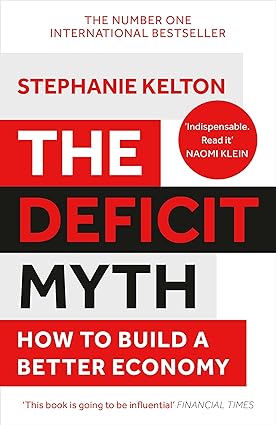
The Deficit Myth by Stephanie Kelton - Modern Monetary Theory - Paperback - John Murray Press - Economics & Public Policy BookThe Deficit Myth by Stephanie Kelton is a thought-provoking book that rethinks how modern economies work. Drawing on Modern Monetary Theory (MMT), Kelton challenges the conventional wisdom that government deficits are inherently dangerous, arguing instead that they can be powerful tools for funding public services and infrastructure. This paperback edition is a clear and accessible explanation of public finance and economic policy, making it essential reading for anyone interested in these topics. About the book, economist Stephanie Kelton dismantles the idea that government deficits are a looming disaster, showing that for countries that issue their own currency, the true constraint on spending is not a shortage of money but a shortage of political will to invest in the things that matter.5,99 £*Shipping: 2,99 £Secure redirect to the provider



-
How does modulation work?
Modulation is the process of varying a carrier signal's properties, such as its amplitude, frequency, or phase, in order to encode information onto it. This allows the carrier signal to carry the information over a communication channel. For example, in amplitude modulation (AM), the amplitude of the carrier signal is varied in accordance with the information signal. At the receiving end, the modulation is reversed through demodulation, allowing the original information to be recovered. Modulation is a fundamental concept in communication systems, allowing for the transmission of information over long distances. **
-
What are the characteristics of modulation?
Modulation is the process of varying a carrier signal's properties, such as amplitude, frequency, or phase, in order to transmit information. The characteristics of modulation include the ability to encode information onto a carrier signal, allowing for efficient transmission over long distances. Modulation also enables multiple signals to be transmitted simultaneously over the same medium, known as multiplexing. Additionally, modulation allows for the signal to be easily demodulated and the original information to be recovered at the receiving end. **
-
What is the project Pulse Width Modulation?
Pulse Width Modulation (PWM) is a technique used to encode a message into a pulsing signal. It involves varying the width of the pulse while keeping the frequency constant. This method is commonly used in electronic devices to control the power supplied to electrical devices, such as motors, LEDs, and speakers. By adjusting the duty cycle of the pulse, PWM allows for precise control over the output voltage or current, making it an efficient way to regulate the speed or intensity of various components. **
-
Is urban design more like city planning or urban development?
Urban design is more closely related to city planning than urban development. City planning focuses on the organization and development of urban areas, including land use, infrastructure, and public spaces, which are all key components of urban design. Urban development, on the other hand, typically refers to the physical construction and economic growth within urban areas, which is influenced by urban design and city planning decisions. Therefore, while urban design is related to both city planning and urban development, it is more aligned with the principles and goals of city planning. **

How can pulse width modulation be explained simply?
Pulse width modulation (PWM) is a method used to control the amount of power delivered to a load by varying the width of the pulse signal. In simple terms, PWM works by turning the power on and off at a fast rate, with the ratio of on-time to off-time determining the average power delivered. By adjusting this ratio, PWM can effectively control the speed of motors, brightness of LEDs, and other parameters in electronic systems. **
How does the modulation transfer function typically proceed?
The modulation transfer function (MTF) typically proceeds by measuring the ability of an optical system to transfer contrast from the object to the image. This is done by analyzing the spatial frequency response of the system, which describes how well the system can reproduce different levels of detail in the object. The MTF is often measured by imaging a test pattern with known spatial frequencies and analyzing the contrast of the resulting image. The MTF is then plotted as a function of spatial frequency, showing how contrast is transferred at different levels of detail. **
Top-Angebote
Products related to Modulation:
-
Mobi Peeka Development MirrorPEEKA® developmental mirror was designed by our team of doctors, therapists and parents to help children explore, learn and grow. When you place PEEKA® in the hands of your little ones, you will be amazed at the variety of ways they find to play...26,99 $*Shipping: 0,00 $Secure redirect to the provider
-
ClearBags "#10 Policy Premium Envelopes, White 4 1/8"" x 9 1/2"" 50 pack"White, Premium Opaque Envelopes feature a stellar brightness and balanced white shade. The smooth and uniform print surface delivers rich and vibrant colors. White, Premium Opaque Envelopes provide uncompromising quality and excellent value....24,79 $*Shipping: 0,00 $Secure redirect to the provider
-
ClearBags "#10 Policy Premium Envelopes, Natural 4 1/8"" x 9 1/2"" 50 pack"Natural, Premium Opaque Envelopes feature a smooth and uniform print surface delivers rich and vibrant colors. Natural, Premium Opaque Envelopes provide uncompromising quality and excellent value. FSC and SFI-Certified and endorsed by the Rainforest...27,56 $*Shipping: 0,00 $Secure redirect to the provider
-
Playful Picks Intelligent Escaping Toy Interactive Baby Development Toy Intelligent Escaping Toy Interactive Baby Development ToyIntelligent Escaping Toy The Ultimate Interactive Baby Development ToyDont let your toddlers get glued to mobile screens; introduce them to the Intelligent Escaping Toy, the perfect alternative that promotes healthy growth and development. Unlike...29,97 $*Shipping: 0,00 $Secure redirect to the provider
-
What is the difference between frequency modulation and amplitude modulation?
Frequency modulation (FM) and amplitude modulation (AM) are two different methods used in radio broadcasting to carry a signal. The main difference between the two is how they vary the carrier wave to transmit information. In AM, the amplitude of the carrier wave is varied in proportion to that of the input signal, while in FM, the frequency of the carrier wave is varied. FM is known for its better sound quality and resistance to noise, while AM is simpler and has a longer range. **
-
What is the difference between amplitude modulation and frequency modulation?
Amplitude modulation (AM) is a method of encoding information on a carrier wave by varying its amplitude, while frequency modulation (FM) encodes information by varying the frequency of the carrier wave. In AM, the amplitude of the carrier wave is directly proportional to the amplitude of the input signal, whereas in FM, the frequency of the carrier wave is varied in proportion to the amplitude of the input signal. FM is less susceptible to noise and interference compared to AM, making it a more reliable method for transmitting information over long distances. **
-
How does modulation work?
Modulation is the process of varying a carrier signal's properties, such as its amplitude, frequency, or phase, in order to encode information onto it. This allows the carrier signal to carry the information over a communication channel. For example, in amplitude modulation (AM), the amplitude of the carrier signal is varied in accordance with the information signal. At the receiving end, the modulation is reversed through demodulation, allowing the original information to be recovered. Modulation is a fundamental concept in communication systems, allowing for the transmission of information over long distances. **
-
What are the characteristics of modulation?
Modulation is the process of varying a carrier signal's properties, such as amplitude, frequency, or phase, in order to transmit information. The characteristics of modulation include the ability to encode information onto a carrier signal, allowing for efficient transmission over long distances. Modulation also enables multiple signals to be transmitted simultaneously over the same medium, known as multiplexing. Additionally, modulation allows for the signal to be easily demodulated and the original information to be recovered at the receiving end. **
Similar search terms for Modulation
-
Yellow Kite Food Fix by Mark Hyman MD - Paperback - Food Policy, Health & Environment Non-Fiction BookFood Fix by Mark Hyman is a non-fiction paperback book that explores the connection between food and the crises facing society. Written by New York Times best-selling author and physician Mark Hyman, this book argues that fixing our broken food system could have a positive impact on our health, local economies, communities, and the planet. In Food Fix, Hyman lays bare how industrial food and agriculture systems are shaped by powerful financial interests, driving issues such as obesity and type 2 diabetes. This book is essential reading for anyone concerned about the intersection of food, health, and the environment.3,49 £*Shipping: 2,99 £Secure redirect to the provider
-
The Deficit Myth by Stephanie Kelton - Modern Monetary Theory - Paperback - John Murray Press - Economics & Public Policy BookThe Deficit Myth by Stephanie Kelton is a thought-provoking book that rethinks how modern economies work. Drawing on Modern Monetary Theory (MMT), Kelton challenges the conventional wisdom that government deficits are inherently dangerous, arguing instead that they can be powerful tools for funding public services and infrastructure. This paperback edition is a clear and accessible explanation of public finance and economic policy, making it essential reading for anyone interested in these topics. About the book, economist Stephanie Kelton dismantles the idea that government deficits are a looming disaster, showing that for countries that issue their own currency, the true constraint on spending is not a shortage of money but a shortage of political will to invest in the things that matter.5,99 £*Shipping: 2,99 £Secure redirect to the provider
-
Uplift Curations Montessori Busy Ball Grasping Toy For Early Sensory Development Montessori Busy Ball Grasping Toy For Early Sensory DevelopmentSupport your babys earliest learning moments with a toy designed for discovery and growth. This engaging Montessori busy ball encourages babies to explore, grab, and interacthelping build essential skills through play. Its open, easytohold structure...46,50 $*Shipping: 0,00 $Secure redirect to the provider
-
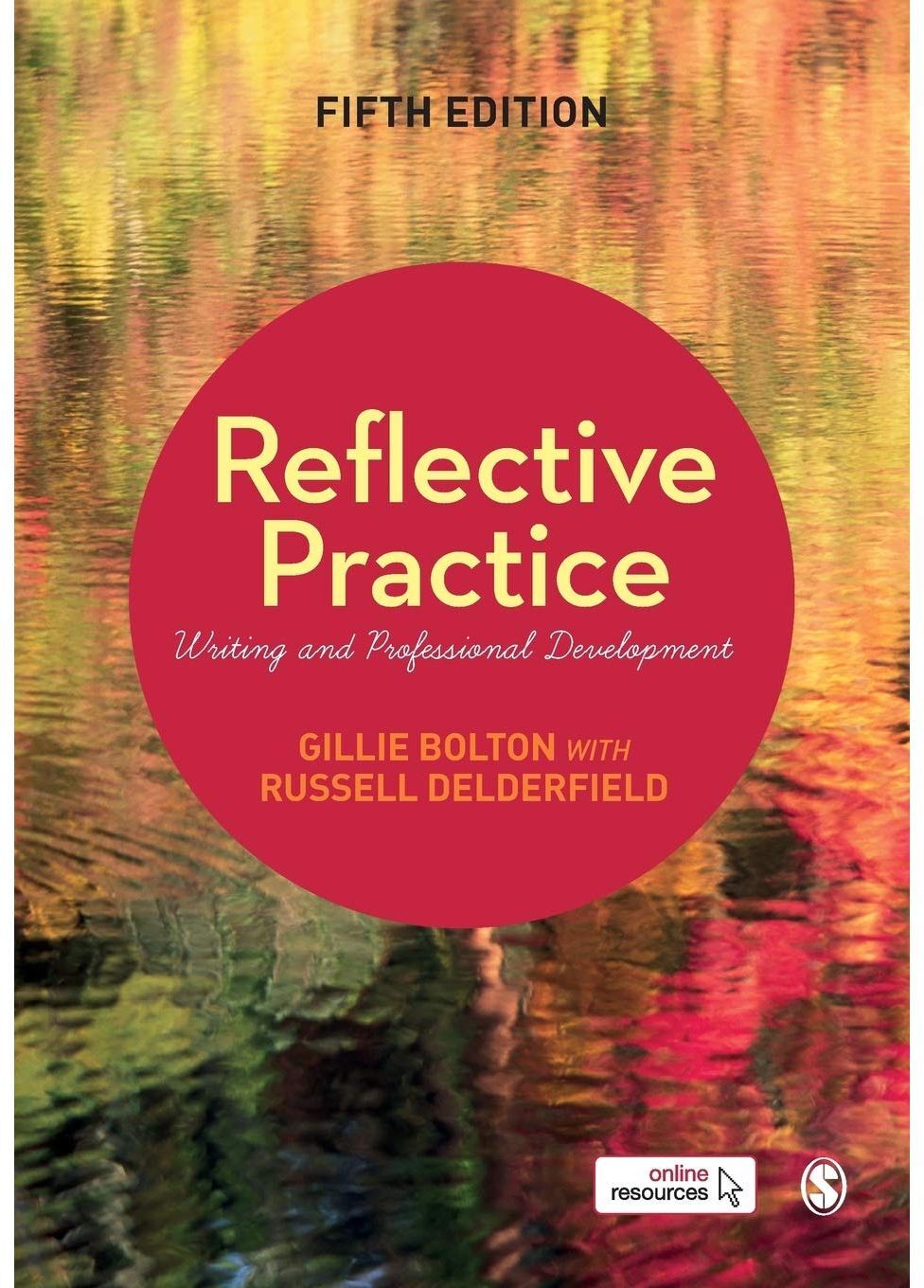
SAGE Publications Reflective Practice: Writing and Professional DevelopmentReflecting thoughtfully on your work is vital for improving your own self-awareness, effectiveness and professional development. This newly updated fifth edition of Gillie Bolton’s bestselling book explores reflective writing as a creative and dynamic process for this critical enquiry. New to this edition: An expanded range of exercises and activities A new emphasis on using e-portfolios Further guidance on reflective writing assignments Enhanced discussion of reflection as a key employability skill Additional online resources This popular book has been used worldwide in various disciplines including education, social work, business and management, medicine and healthcare and is essential reading for students and professionals seeking to enhance their reflective writing skills and to examine their own practice in greater critical depth.18,19 £*Shipping: 2,99 £Secure redirect to the provider
-
What is the project Pulse Width Modulation?
Pulse Width Modulation (PWM) is a technique used to encode a message into a pulsing signal. It involves varying the width of the pulse while keeping the frequency constant. This method is commonly used in electronic devices to control the power supplied to electrical devices, such as motors, LEDs, and speakers. By adjusting the duty cycle of the pulse, PWM allows for precise control over the output voltage or current, making it an efficient way to regulate the speed or intensity of various components. **
-
Is urban design more like city planning or urban development?
Urban design is more closely related to city planning than urban development. City planning focuses on the organization and development of urban areas, including land use, infrastructure, and public spaces, which are all key components of urban design. Urban development, on the other hand, typically refers to the physical construction and economic growth within urban areas, which is influenced by urban design and city planning decisions. Therefore, while urban design is related to both city planning and urban development, it is more aligned with the principles and goals of city planning. **
-
How can pulse width modulation be explained simply?
Pulse width modulation (PWM) is a method used to control the amount of power delivered to a load by varying the width of the pulse signal. In simple terms, PWM works by turning the power on and off at a fast rate, with the ratio of on-time to off-time determining the average power delivered. By adjusting this ratio, PWM can effectively control the speed of motors, brightness of LEDs, and other parameters in electronic systems. **
-
How does the modulation transfer function typically proceed?
The modulation transfer function (MTF) typically proceeds by measuring the ability of an optical system to transfer contrast from the object to the image. This is done by analyzing the spatial frequency response of the system, which describes how well the system can reproduce different levels of detail in the object. The MTF is often measured by imaging a test pattern with known spatial frequencies and analyzing the contrast of the resulting image. The MTF is then plotted as a function of spatial frequency, showing how contrast is transferred at different levels of detail. **
* All prices are inclusive of VAT and, if applicable, plus shipping costs. The offer information is based on the details provided by the respective shop and is updated through automated processes. Real-time updates do not occur, so deviations can occur in individual cases. ** Note: Parts of this content were created by AI.